
Ethnobiology and Ecology
in a Changing World
Research in our lab sits at the intersection of plant population ecology and ethnobiology. We study how plant populations respond, demographically and evolutionarily, to chronic human disturbances (e.g., harvest, fire, and fragmentation) and to changing biotic and abiotic conditions (e.g., drought and flooding). Harvest is our central focus: a selective pressure applied repeatedly, at rates set by human demand rather than by the plant’s ecology. We also conduct hypothesis-driven research in ethnobiology. Here we seek to understand how and why human societies select and manage natural resources, and what local management practices mean for conservation and for the ecosystems themselves.
Our work is interdisciplinary, combining long-term field studies, ethnographic methods, population genomics, phylogenetic comparative methods, and mathematical modeling. Much of it is rooted in the Peruvian Amazon. There, in partnership with Shipibo-Konibo communities, we assess the impacts of harvest on culturally and economically important non-timber forest products (NTFPs) and work to restore them. We also take these questions to a global scale, asking which harvested species recover and why people use the plants they do. A greater understanding of these human–environmental interactions is essential for developing novel strategies to engage with and responsibly manage the organisms and ecosystems on which humanity relies for livelihoods, subsistence, and survival.

Michael A. Coe, PhD
Assistant Professor
Department of Biological Sciences
Tarleton State University
“We learn the most when science humbly meets the wisdom of those who have lived with the forest for generations.”
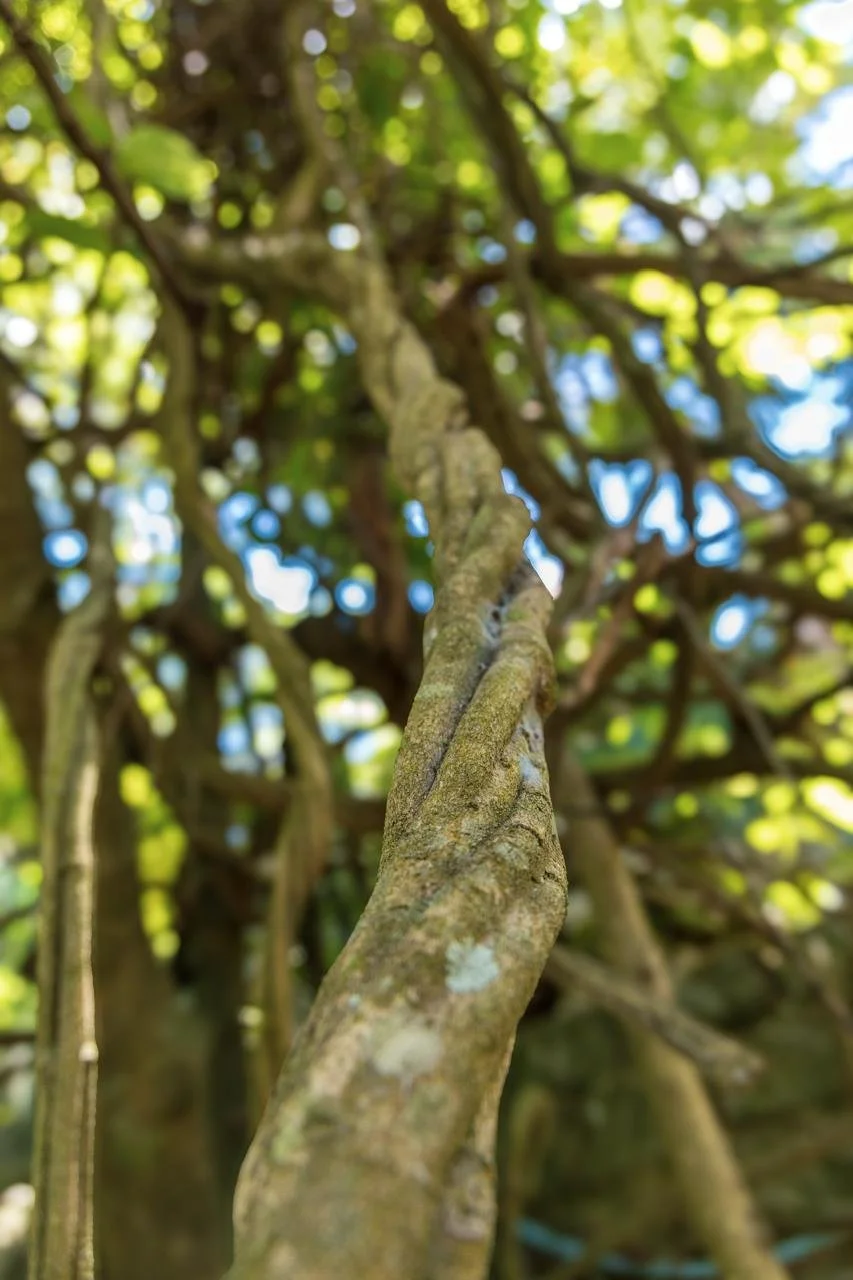
Michael Coe is an ethnobiologist and plant population ecologist with a PhD in Evolution, Ecology, and Conservation Biology. His research focuses on the relationships between plants, people, and ecosystems, especially níshi lianas (Banisteriopsis caapi) and the Indigenous knowledge systems that surround them. Passionate about biodiversity and the sustainable management of natural resources, Michael works to integrate ecology with traditional ecological knowledge and practice. He serves as Associate Editor for Plant Ecology and Ethnobotany and Economic Botany.
ORCID | ResearchGate | CV
The Lab Focus
Ethnobiology & Human–Environmental Relationships
Testing why human societies select the plants, and the plant parts, they do, using global data and evolutionary relationships to explain patterns of medicinal and cultural plant use across generations.
Applied Ecology in a Changing World
Studying how plant populations respond to harvest, disturbance, and climate variation, from long-term field demography in the Amazon to global syntheses of which harvested species recover.
Sustainable Ayahuasca Research
Assessing how harvest affects the demography and genetics of the ayahuasca vine to develop science-based, culturally respectful strategies for sustainable harvest and plant medicine production.
Woven Science, Two-Eyed Seeing, & Indigenous Collaboration
Building reciprocal partnerships that bring scientific research and Indigenous ecological knowledge together to co-create conservation and restoration solutions.
Conservation and Restoration of Cultural & Ecological Landscapes
Restoring non-timber forest products and sacred plant species with Shipibo-Konibo communities through the Pacha Nishi Project, a restoration and conservation genetics field station in the Peruvian Amazon built for long-term ecological and cultural resilience.
Quantitative Methods & Hypothesis-Driven Research
Putting long-standing ecological and ethnobiological theory to the test with integral projection models, population genomics, phylogenetic comparative methods, and meta-analysis.
Teaching & Mentorship
Offering transformative courses in ethnobiology, plant taxonomy, plant physiology, and environmental and restoration ecology, while mentoring the next generation of scientists, educators, and ecological leaders.
Global Learning & Local Impact
Creating educational and research opportunities for students from diverse backgrounds, including Indigenous students from the Amazon, to cultivate leadership rooted in both science and tradition.
Interested in our work?
Whether you're a student, researcher, community partner, or just curious about what we do, we'd love to hear from you. Reach out to learn more about our research, teaching, collaborations, or upcoming projects. Let’s connect and grow something meaningful together.
“
The world is not a collection of isolated cultures. it is a single, intricately woven web of life, and we are all a part of it.
-Wade Davis